All Articles

In archive: 12 articles for tag English

This page contains materials that I have been directly involved in creating: articles I wrote personally, texts in the preparation of which I participated as a co-author, and publications about me and my professional journey.


The main publishing platforms are Habr and Medium. These platforms serve as primary sources of materials, and the links here lead directly to the originals.

26.03.2026
Article cover: Python Gotchas You’ll Almost Certainly Be Asked About in a Technical Interview (Part 2)
Python Gotchas You’ll Almost Certainly Be Asked About in a Technical Interview (Part 2)
My name is Evgeny Bartenev. I’m the author of the Python Developer course at TripleTen and an active software developer. Over the years, I’ve interviewed hundreds of candidates and have also spent plenty of time in the interview seat myself, so I have a good sense of what companies actually test for and where candidates most often stumble. And it’s not just junior developers. Even experienced engineers get tripped up by Python’s less obvious behavior. The first part of this article sparked a lot of discussion. In the comments, readers shared their own interview experiences, pointed out subtle Python behaviors I hadn’t covered, and asked some great follow-up questions. In this second part, I’ll keep going through the Python quirks that junior candidates most often run into during technical interviews. In my experience, these are exactly the kinds of topics that cause people to freeze up. As before, I’m not focusing on generic interview questions. I’m focusing on the language features behind those questions, the ones interviewers love turning into tricky little puzzles.

Published on medium →
11.09.2025
Article cover: Python Traps and How to Handle Them During an Interview
Python Traps and How to Handle Them During an Interview
At first glance, Python looks simple and straightforward, which is exactly why it's such a great language to start a developer career with. However, behind that simplicity lie several nuances that interviewers often use. This is where junior developers can easily get caught off guard: your code seems to work fine, but suddenly the behavior isn't what you expected. As the author of the Python Developer course at Yandex Practicum, I often break down these situations on my YouTube channel, where I run open mock interviews with junior developers. The examples I cover aren't abstract; they come directly from real interview sessions and observations. In this article, I've collected the most interesting Python quirks that repeatedly come up in interviews and that you'll almost certainly encounter in your own technical screening. I'll show you the kinds of questions interviewers typically ask and explain why they matter. Whether you're preparing for your very first job as a junior developer or want to brush up on your fundamentals, this breakdown will be a valuable resource.
Published on medium →
04.09.2025
Article cover: The Command Line Interface: Essentials Every Developer Should Know
The Command Line Interface: Essentials Every Developer Should Know
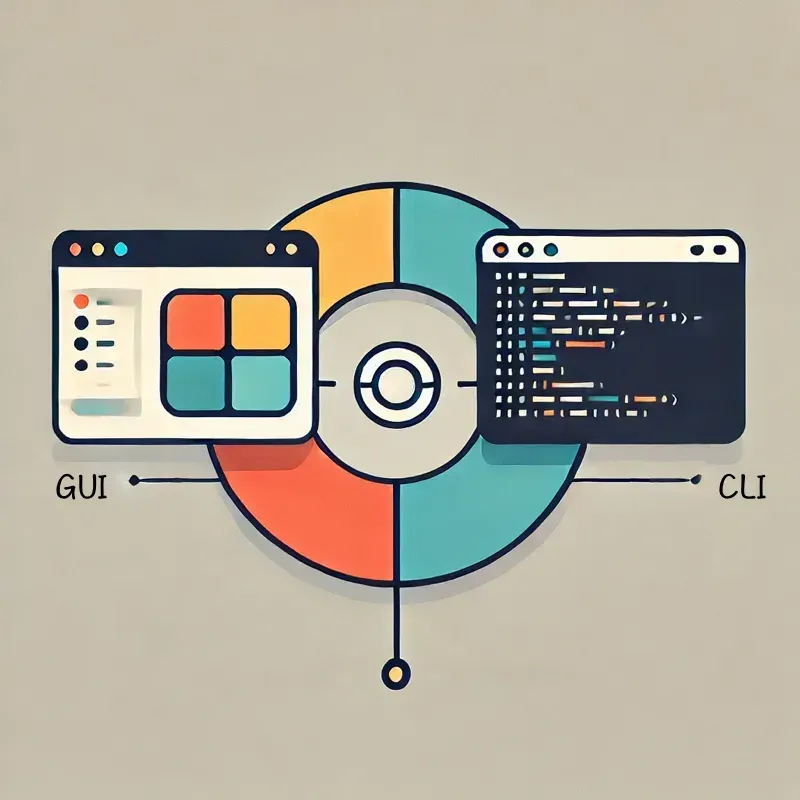
If you've ever read developer documentation, you've probably seen phrases like "Open the console," "Run this command in the terminal," or "You'll need the command line for this step." These tools are often described as incredibly powerful and useful, but what does that actually mean in practice? Why is the terminal considered an indispensable tool for developers, and what can it do that goes beyond familiar graphical interfaces? In this article, we'll unpack the terms terminal, shell, and command line, highlighting the differences between them and how they work together. You'll learn why working in the console is often faster and more efficient, and we'll walk through practical examples of tasks that are difficult or sometimes impossible to accomplish using only a graphical interface.
Published on medium →
15.07.2025
Article cover: Is Microsoft Azure Cosmos DB Really Fast?
Is Microsoft Azure Cosmos DB Really Fast?
When building high-load systems, one of the biggest challenges is making sure your solution performs well under pressure. This is especially important when your system relies heavily on a database — often the main bottleneck for throughput. That's exactly what happened in one of my recent projects, where Cosmos DB turned out to be the limiting factor. The client had strict performance requirements, and meeting them meant I had to dive deep into what Cosmos DB is really capable of — and how to get the most out of it. At first, I didn't have a clear answer to a simple but critical question: how fast can we actually send data to Cosmos DB? Microsoft's documentation gave some general ideas and high-level guidelines, but it wasn't enough to design a solid, performance-focused solution. To make things more challenging, the client chose Kotlin as the development language — and there's no official Cosmos DB SDK for Kotlin.
Published on medium →
25.04.2024
Article cover: Nginx as a Reverse Proxy in Azure Container App Environment
Nginx as a Reverse Proxy in Azure Container App Environment
Nginx is a popular web and proxy server known for its high performance, stability, rich functionality, easy configuration, and low resource consumption. This versatility makes Nginx a popular choice for a wide range of projects, from small personal websites to large commercial web platforms and services, and it is even used within major cloud platforms like Microsoft Azure. For instance, Nginx can be configured as a reverse proxy to manage and limit traffic to your Azure Container Apps environment by routing all requests through a single public endpoint.
Published on medium →
17.04.2024
Article cover: Banana Skins in a Python Developer Interview
Banana Skins in a Python Developer Interview
Large IT company, office 404. Interview for the position of Python developer. Participants: department head, senior developer, HR manager. And I'm the candidate. Department head: — We've covered everything. Looks out into the hallway. — Oh, Jamie! Would you like to ask the candidate one last question? Jamie works in a neighboring department, does something completely different, and has never programmed in Python but once read something. Jamie sits down at the table. He wasn't there last time, but today, his presence will decide my fate. Jamie: — What is the maximum list size in Python? I instantly turn pale. While this question touches on the basics of the language, it rarely affects a developer's day-to-day work. But, to my shame, I find it difficult to give a precise answer. The department head and the senior developer exchange glances. Department head (to the senior developer): — Hmm, let's look at other candidates. And just like that, after an hour of discussing technically complex issues, one unexpected and impractical question from a random person in the office can dash the hopes of joining the team. In this interview, as in many others, technical expertise was not the deciding factor. Sometimes, a question completely unrelated to the developer's daily tasks determines everything.
Published on medium →